
.svg)


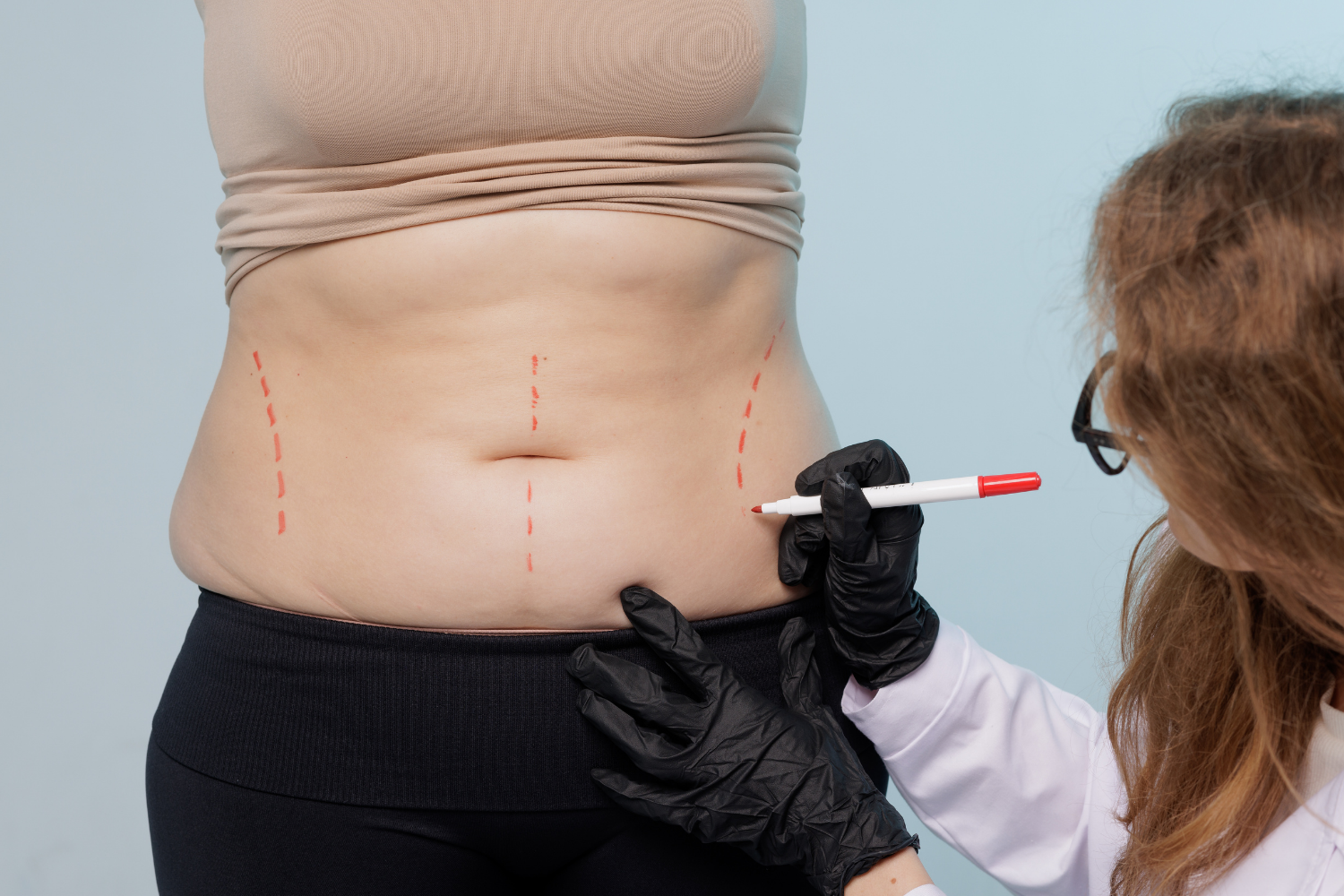
Repositioning of the navel during abdominoplasty is one of the most important and artistic steps in this surgery. Although many people associate tummy tuck only with the removal of excess skin or fat, the location and shape of the navel largely determine the naturalness of the result.
Dr. Allan Ceballos, a plastic surgeon in Guadalajara recognized for his personalized approach and subtle results, combines advanced surgical technique with unique aesthetic sensitivity to achieve a firm, proportionate, and naturally attractive abdomen.
During a tummy tuck, excess abdominal skin is removed, and muscles are tightened to restore a firmer contour. However, this stretch alters the natural position of the navel, which could become too low or distorted if not repositioned properly.
The surgeon's goal is not to “move” the navel, but to create a new opening in the repositioned skin through which the original navel emerges, which retains its internal connection and its irrigation. This technique guarantees a realistic appearance, with a harmonious result and without visible signs of intervention.
You may also be interested in: What is Abdominoplasty? Understanding the Procedure and Its Benefits.
In most cases, the surgeon makes a circular incision around the navel, carefully freeing it from surrounding skin but keeping it attached to its base. After removing the excess skin and tightening the abdominal wall, a new opening is created in the ideal position of the abdomen, where the navel is re-anchored and sutured internally.
Dr. Ceballos uses precise, low-tension sutures, which make it possible to hide the scar inside the navel and preserve its natural shape.
This methodology establishes ideal anatomical proportions to determine the exact point where the new umbilical hole should be located: approximately 15 cm from the mammary line and 10 cm from the pubic region. Dr. Ceballos adapts this technique to the specific morphology of each patient, ensuring visual balance between the torso and the lower abdomen.
Inspired by the Golden Section (1,618), this technique seeks a location of the navel that respects the natural proportions of the human body. An opening is created with a subtly vertical shape, similar to a spade card, which gives depth and shade to the navel, avoiding the flat or round appearance. The result is a youthful-looking navel that is aesthetically balanced with the rest of the abdomen.
With advances in surgical planning, some procedures include three-dimensional modeling of the abdomen to define the depth, projection, and orientation of the navel. Dr. Ceballos applies this approach to reconstruct anatomy with millimeter precision, ensuring that the new location of the navel is consistent with the body's natural contours.
A beautiful abdomen depends not only on the absence of excess skin, but also on the visual integration between the navel, midline, and abdominal contour. The ideal navel is usually oval in shape and vertical orientation, with a deep fold and a discreet inner shadow.
Dr. Ceballos avoids visible circular scarring (known as a “donut scar”) through internal sutures and a vertical orientation, which hides the incision inside the natural fold of the navel. Their goal is to make the result look so natural that no one can notice that there was surgery.
Also read: Before and After Abdominoplasty: Transformative Results and Keys to Recovery.
One of the biggest benefits of current techniques is the strategic placement of scars. The main incision is located in the lower abdomen, just above the pubic line, so that it can be easily hidden under underwear or a swimsuit.
In the case of the navel, Dr. Ceballos makes an internal incision in a vertical or inverted “V” shape, so that the scar is hidden within the very structure of the navel. Over time, this area adopts a texture and color similar to the rest of the skin, achieving a practically imperceptible appearance.
Everybody has unique proportions. For this reason, Dr. Ceballos does not apply rigid measures, but rather analyzes the distance between the navel, the mammary line, the iliac crests, and the pubis to define the exact position.
This personalized assessment allows the navel to be maintained centered and in harmony with the rest of the abdomen, following the natural anatomy of each patient. The result is a slender, firm, and visually balanced abdomen.
Navel repositioning is a safe procedure when performed by a certified and experienced plastic surgeon. However, as with any surgery, there are rare risks:
Dr. Ceballos minimizes these risks through a meticulous technique and continuous postoperative monitoring, personally attending to every detail of the recovery.
In some cases - particularly in patients with firm skin and minimal laxity - a variation called Abdominoplasty with floating navel. Here, the navel separates partially from its base and “floats” slightly downward as the skin tightens, avoiding a visible incision around the navel.
This option is ideal for those looking for a less invasive intervention and an even more discreet scar, as long as their anatomy allows it.
Recovery after a tummy tuck with umbilical repositioning is usually progressive and well-tolerated.
Dr. Ceballos and his team provide constant support, providing precise instructions on mobility, incision care, and the use of compression garments.
In general, patients can walk gently indoors for the first few days and resume normal activities after a few weeks, always following medical advice. The final result — a firm, toned abdomen with a naturally located navel — is fully defined over the first few months.
Each procedure with Dr. Ceballos combines technical precision, aesthetic art, and human empathy. Its philosophy focuses on highlighting the natural beauty of each person, without excesses or artificial results.
Throughout the process—from the first consultation to the final recovery—Dr. Ceballos personally accompanies each patient, providing constant care, safety, and direct communication. This closeness, together with his surgical mastery and artistic vision, makes the results not only beautiful but also harmonious, safe, and authentic.
Navel repositioning during tummy tuck represents one of the greatest technical and aesthetic challenges of body surgery. In the expert hands of Dr. Allan Ceballos, this technique becomes an art that combines proportion, precision, and naturalness.
The result is not just a flat abdomen, but a comprehensive transformation that restores confidence, balance, and a renewed connection with one's own body.
Ready to improve your results? Schedule a consultation with Dr. Ceballos and discover how his experience can help you achieve the abdomen you've always imagined.
.png)
9 A. M. - 8 P. M.
Monday - Friday
Closed
Saturday - Sunday